
红字
特斯拉第三季度营收214.54亿美元 净利润同比增长103%_我的网站

一 | 特斯拉汽车第三季度调整后每股收益超出华尔街分析师预期,但营收未能达到预期,从而导致盘后股价下跌逾3%。
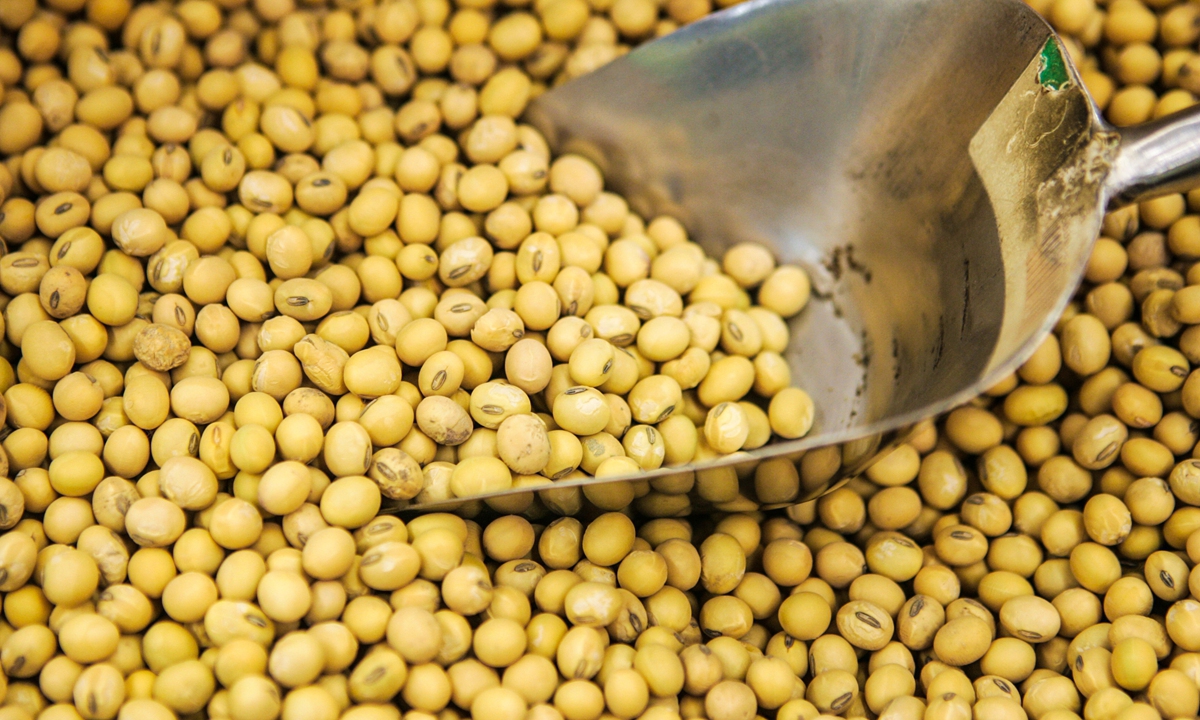
China continues to be the leading destination for Brazilian soybeans, and the Brazilian soybean industry wants to further deepen this relationship, expecting historically high volumes in the coming months, the Brazilian Association of Soybean Growers (Aprosoja Brasil) told the Global Times on Friday.
Brazilian soybean exports to China have remained very strong. China imported 12.08 million tons of soybeans from Brazil in June, up 13.7 percent year-on-year, while imports from the US fell 20.9 percent year-on-year to 1.27 million tons, according to data from the General Administration of Customs.
China imported 34.75 million tons of soybeans from Brazil during the period, up 9.1 percent year-on-year, according to Aprosoja Brasil. "Based on arrivals and customs clearance in China, there was clear growth," the association said.
According to the official data platform Brazilian Comex Stat, which records shipments at origin, 48.32 million metric tons were destined for China from January through June, largely unchanged from 48.41 million metric tons during the same period in 2025.
The difference between the two datasets mainly reflects timing and methodological differences between the recording of departures, cargoes in transit, arrivals and customs clearance.
Aprosoja Brasil said that the broader economic conclusion is the same: "Trade flows remained historically strong, China continued to be the leading destination for Brazilian soybeans, and Brazil's total soybean exports reached a first-half record of 69.57 million metric tons."
For farmers, strong export volumes help support the marketing of the crop, although record exports do not automatically mean record farm margins, said the Brazilian industry association.
China is the world's largest soybean importer. Imported soybeans are mainly used for oil production and animal feed. In terms of trading partners, China mainly imports soybean-related products from Brazil, the US, Argentina, Uruguay and Canada.
Brazil ranks among the world's leading soybean producers and exporters, with China being its largest export market for soybeans, according to the Xinhua News Agency.
Commenting on the significance of the Chinese market, Aprosoja Brasil said "China is absolutely strategic to Brazil's soybean industry," citing data showing that in 2025, China purchased 85.4 million metric tons, representing approximately 79 percent of all Brazilian soybean exports.
The two countries also have a highly complementary trade relationship. For Brazilian farmers, Chinese demand provides scale, market liquidity and greater capacity for long-term planning, said the Brazilian soybean industry association. For China, Brazil offers large, competitive and reliable supplies, as well as a crop calendar that complements production in other supplying countries.
Previously, policy shifts, such as US unilateral tariff measures, have caused disruption for US soybean farmers and other agricultural producers, Lü Xiang, research fellow at the Chinese Academy of Social Sciences, told the Global Times.
At the same time, China has been diversifying imports, including from Brazil and Argentina, to reduce risks from trade uncertainty, according to Lü.
Aprosoja Brasil noted that this partnership should not be seen merely as a temporary consequence of trade disputes involving third countries. Instead, it is a structural and mutually beneficial relationship, based on the complementarity between Brazil's production capacity and China's large demand for food, animal feed and protein, the industry group said.
Looking ahead to the soybean trade for the rest of the year, Aprosoja Brasil said that they are positive, while having a prudent mindset. Brazil has completed the harvest of a record soybean crop of approximately 180.6 million metric tons, and Brazilian soybean exports are expected to reach 116.3 million metric tons in 2026, which would also be a record, the association said.
"Brazil therefore has sufficient supply to continue serving the Chinese market strongly in the coming months... We expect historically high volumes, although not necessarily growth every single month, because soybean trade is seasonal and Northern Hemisphere supplies become more prominent during the second half of the year," it said.
。第三季度业绩概要:在截至9月30日的这一财季,特斯拉归属于普通股股东的净利润为32.92亿美元,与去年同期归属于普通股股东的净利润的16.18亿美元相比增长103%,而上一季度归属于普通股股东的净利润为22.59亿美元。特斯拉第三季度归属于普通股股东的每股收益为0.95美元,与去年同期归属于普通股股东的每股收益0.48美元相比增长98%,而上一季度归属于普通股股东的每股收益为0.65美元。不计入某些一次性项目(不按照美国通用会计准则),特斯拉第三季度归属于普通股股东的调整后净利润为36.54亿美元,与去年同期归属于普通股股东的调整后净利润20.93亿美元相比增长75%,而上一季度归属于普通股股东的调整后净利润为26.20亿美元。

二 | 不计入某些一次性项目(不按照美国通用会计准则),特斯拉第三季度归属于普通股股东的调整后每股收益为1.05美元,与去年同期归属于普通股股东的调整后每股收益0.62美元相比增长69%,而上一季度归属于普通股股东的调整后每股收益为0.76美元,这一业绩超出分析师此前预期。据雅虎财经频道提供的数据显示,26名分析师此前平均预期特斯拉第三季度调整后每股收益将达0.99美元。

三 | 特斯拉汽车第三季度总营收为214.54亿美元,与去年同期的137.57亿美元相比增长56%,而上一季度为169.34亿美元,这一业绩未能达到分析师此前预期。据雅虎财经频道提供的数据显示,25名分析师此前平均预期特斯拉第三季度营收将达219.6亿美元。特斯拉汽车第三季度运营利润为36.88亿美元,与去年同期的20.04亿美元相比增长84%,而上一季度为24.64亿美元。

四 | 特斯拉汽车第三季度运营利润率为17.2%,与去年同期的14.6%相比上升262个基点,而上一季度同样为14.6%。

五 | 特斯拉汽车第三季度调整后EBITDA(即未计入利息、税项、折旧及摊销的净利润)为49.68亿美元,与去年同期的32.03亿美元相比增长5%,而上一季度为37.91亿美元。特斯拉汽车第三季度调整后EBITDA利润率为23.2%,与去年同期的23.3%相比下降13个基点,而上一季度为22.4%。各部门业绩:特斯拉汽车第三季度来自于汽车业务的总营收为186.92亿美元,与去年同期的120.57亿美元相比增长55%,而上一季度为146.02亿美元。其中:- 来自于汽车销售业务的营收为177.85亿美元,相比之下去年同期为113.93亿美元,而上一季度为136.70亿美元;- 来自于汽车监管信用(regulatory credit)的营收为2.86亿美元,相比之下去年同期为2.79亿美元,而上一季度为3.44亿美元;- 来自于汽车租赁业务的营收为6.21亿美元,相比之下去年同期为3.85亿美元,而上一季度为5.88亿美元。- 该季度汽车业务的毛利润为52.12亿美元,与去年同期的36.73亿美元相比增长42%,而上一季度为40.81亿美元。该季度汽车业务的毛利率为27.9%,与去年同期的30.5%相比下降258个基点,而上一季度同样为27.9%。特斯拉汽车第三季度来自于发电和储能业务的营收为11.17亿美元,相比之下去年同期为8.06亿美元,而上一季度为8.66亿美元。特斯拉汽车第三季度来自于服务及其他业务的营收为16.45亿美元,相比之下去年同期为8.94亿美元,而上一季度为14.66亿美元。产量和交付量数据:特斯拉汽车第三季度的总汽车产量为365923辆,与去年同期的237823辆相比增长54%。

六 | 其中,Model S和Model X车型的产量为19935辆,与去年同期的8941辆相比增长123%;Model 3和Model Y车型的产量为345988辆,与去年同期的228882辆相比增长51%。特斯拉汽车第三季度的总汽车交付量为343830辆,与去年同期的241391辆相比增长42%。

七 | 其中,Model S和Model X车型的交付量为18672辆,与去年同期的9289辆相比增长101%;Model 3和Model Y车型的交付量为325158辆,与去年同期的232102辆相比增长40%。成本和支出:特斯拉汽车第三季度总营收成本为160.72亿美元,相比之下去年同期为100.97亿美元。其中:- 汽车销售业务的营收成本为130.99亿美元,相比之下去年同期为81.50亿美元;- 汽车租赁业务的营收成本为3.81亿美元,相比之下去年同期为2.34亿美元;- 汽车业务的整体运营成本为134.80亿美元,相比之下去年同期为83.84亿美元;- 发电和储能业务的营收成本为10.13亿美元,相比之下去年同期为8.03亿美元;- 服务及其他业务的营收成本为15.79亿美元,相比之下去年同期为9.10亿美元。特斯拉汽车第三季度总运营支出为16.94亿美元,相比之下去年同期为16.56亿美元。其中,研发支出为7.33亿美元,相比之下去年同期为6.11亿美元;销售、总务和行政支出为9.61亿美元,相比之下去年同期为9.94亿美元。现金流和资本支出:特斯拉汽车第三季度来自于业务运营活动的净现金为51.00亿美元,相比之下去年同期来自于业务运营活动的净现金为31.47亿美元,同比增长62%。特斯拉汽车第三季度的资本支出为18.03亿美元,与去年同期的18.19亿美元相比下降1%。特斯拉汽车第三季度的自由现金流为32.97亿美元,与去年同期的13.28亿美元相比增长148%。截至第三季度末为止,特斯拉汽车所持有的现金和现金等价物总额为211.07亿美元,与截至2021年第三季度末为止的160.95亿美元相比增长31%。前景展望:特斯拉表示,该公司计划尽快扩大其制造能力。

八 | 在未来几年时间里,预计车辆交付量将可每年平均增长50%,增长率将取决于设备能力、工厂正常运行时间、运营效率以及供应链的产能和稳定性。特斯拉称,该公司有足够的流动性来为其产品路线图、长期产能扩张计划和其他费用提供资金。特斯拉表示,该公司正在继续执行创新计划以降低制造和运营成本;随着时间的推移,预计该公司除了硬件相关利润以外,软件相关利润也将加速增长。

九 | 特斯拉称,美国得克萨斯州和德国柏林-勃兰登堡工厂的产能扩张速度将受到许多新产品成功推出的影响,并将受到新工厂制造技术以及正在进行中的供应链相关挑战的影响。

十 | 该公司指出,工厂提高产能是需要时间的,而得克萨斯州和德国柏林-勃兰登堡工厂也不例外。

十一 | 特斯拉还称其在Cybertruck的产业化方面正在取得进展,目前计划在得克萨斯州生产这种车型,但首先要提高该工厂的Model Y车型产能。此外,特斯拉Semi车型的初始阶段将于2022年12月启动。股价变动:当日,特斯拉汽车股价在纳斯达克常规交易中上涨1.85美元,报收于222.04美元,涨幅为0.84%。在随后截至美国东部时间周三下午5点48分(北京时间周四凌晨5点48分)的盘后交易中,特斯拉汽车股价下跌6.93美元,至215.11美元,跌幅为3.12%。过去52周,特斯拉汽车的最高价为414.50美元,最低价为204.16美元。(唐风)。
Current article:http://vvxnzxw.linxiuhuaishuangniuzhenrua.bond/news/20260826_377116.html
Published on:06:24:15
相关新闻
- 【观点】南华期货:国债:MLF缩量续作落地,跨月资金面收敛期债全线微跌
- 外国媒体新闻:AMD 300/400系列AM4主板或PCIe 4.0可以通过BIOS升级
- New Padayappa Trailer Drops As Superstar Rajinikanth's Silver Jubilee Celebration Nears
- 吉利混动车型要搭载全新自产电池了?
- 国际足联成立FFE“卖球”遭抵制,为何国际乒联搞WTT,没人反对?
- 他给了王兴兴第一个200万,现在给下一个“宇树”当董事长
- 宠物开箱死亡未售后
- 你是说,在这款游戏里哈基米在打牌玩俄罗斯轮盘?
- RPSC Recruitment 2025: एग्रीकल्चर स्कूल लेक्चरर के पदों पर निकली भर्ती, आवेदन 4 सितंबर से शुरू
- 【透视社·反腐快报】四川省绵阳市政府原党组成员、副市长刘海昌被开除党籍和公职
最后更新
热门新闻
- 真没出息!美菲这波骚操作被中方嘲笑:精神胜利法搞自我安慰
- South Africa freedom day memorial gathering reveals its pursuit of dignity and inclusive governance in post apartheid era
- 美媒BROADROOM统计了现役球员薪资榜单 第一毫无疑问是他
- 乐游抚顺 登山赏“枫”正当时
- 恒指午间休盘涨0.68%,恒生科技指数涨1.58%
- Kareena Kapoor Khan Shares Heartfelt Birthday Post for Sharmila Tagore
- 物理销毁翻车!网友买到打孔SSD:不仅没坏 还能重装系统
- 9月全社会用电量同比增长8.5%
- 太空视角看洛杉矶山火有多严重
- 别再按日期写博客了:知识中心模式让网站流量翻倍的思路